
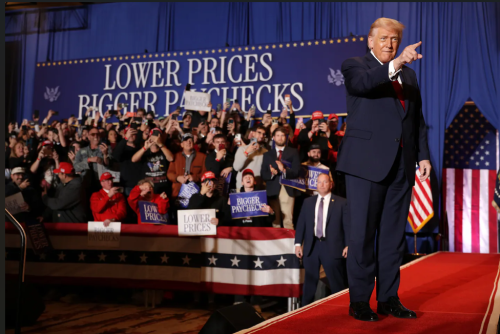
Affordability is one of those words we all think we understand because we live with it every day. For some, it means whether the paycheck stretches far enough to cover groceries and rent. For others, it’s the concern that bigger goals like paying for healthcare, sending a child to college, or buying a home can be reached without an impossible sacrifice. In every case, affordability is personal — shaped by our circumstances, our choices, and the economy around us.
Affordability has unexpectedly become a critical factor in our current lives, particularly since the second Trump administration has so quickly altered the economy. Not only are we having to deal with rising prices caused by his tariffs, we are being told that these short‑term sacrifices will somehow lead to long‑term gains – even as the rich get richer, To sell this message, Donald Trump has launched his Affordability Tour with rally‑style events staged in casino towns and swing districts, turning affordability into a campaign spectacle as much as anything.
The Affordability Tour is riddled with contradictions that are hard to miss. At one rally Trump declared, “I have no higher priority than making America affordable again,” yet in another breath he dismissed affordability concerns as “a Democrat hoax.” He has boasted, “We’re crushing inflation… prices are coming down tremendously,” even as government data showed inflation ticking upward and consumer confidence falling. He blames Democrats for high costs, saying, “The radical Democrats are the reason your groceries and gas are so expensive,” while at the same time defending his tariffs as “the best way to protect American jobs.
These conflicting statements leave the public unsure of the direction in which we are headed, and they open the door to a wide range of interpretations. The following Dayology Analysis presents six different outlooks regarding Trump’s economic policies and where they may be leading. They suggest that our Sun Signs and Day Rays really do influence our opinions.

   #53 THU LEO Aug 2, 1984 JD Vance | 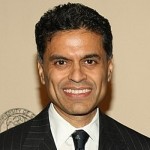   #23 MON AQU Jan 20, 1964 Fareed Zakaria |
   #67 FRI LIB Oct 13, 1989 Alexandria Ocasio‑Cortez | 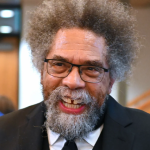   June 2, 1953 #27 TUE GEM Cornell West |
  #33 TUE SAG 11/30/1954 Larry Summers |  #15 MON GEM 5/27 1974 Marjorie Taylor Green |
“Americans need patience on prices but we hear you on affordability concerns.”
JD Vance, is a politician and author serving as the 50th U.S. Vice President, AFFORDABILITY serves as the centerpiece of his political message. He portrays rising costs as a moral crisis that undermines the dignity of working families. In his speeches, Vance casts Donald Trump as the champion who will restore fairness in the economy, arguing that affordable housing, healthcare, and everyday necessities are not luxuries but rights. His #53 THU LEO Dayology signature reflects an especially expansive nature and marks him as a natural leader.
“If America has an affordability crisis, it tends to be in places Democrats govern.”
Fareed Zakaria is a journalist and commentator known for his global perspective on economics and democracy. He frames AFFORDABILITY as a test of national resilience, warning that unchecked inequality erodes trust in institutions. Zakaria argues that accessible education and healthcare are essential to sustaining a competitive society. He stresses that affordability is not simply about prices, but about fairness and opportunity in modern life. His #23 MON AQU Dayology signature is reform‑minded, giving him insight into structural innovation.
“Every American should have stable, dignified housing, health care, and education.”
Alexandria Ocasio‑Cortez, a U.S. Representative, makes AFFORDABILITY central to her progressive political agenda. She portrays housing, wages, and climate costs as interconnected struggles that define dignity for working families, insisting that providing necessities is not charity but justice. Ocasio‑Cortez argues that structural change is required to ensure these essentials are within reach for ordinary people. Her #67 FRI LIB Dayology signature emphasizes cultural values and economic balance, blending human compassion with social equity.
“To be an intellectual really means to speak a truth that allows suffering to speak.”
Cornell West is a philosopher and activist who elevates AFFORDABILITY into a moral and spiritual imperative. He argues that the inability of ordinary people to afford food, shelter, and healthcare is not just an economic failure but a betrayal of a democratic promise. West calls for solidarity and love as antidotes to economic cruelty, urging society to confront inequality head‑on. His #27 TUE GEM Dayology signature highlights a disciplined conscience and prophetic critique with public engagement which challenges injustice.
“Start with the idea that you can’t repeal the laws of economics. ”
Larry Summers is an economist and former U.S. Treasury Secretary who regards AFFORDABILITY as a cornerstone of economic stability. He warns that persistent cost pressures in housing, education, and healthcare undermine productivity and long‑term growth, arguing that affordability must be addressed through pragmatic policy reforms. Summers emphasizes balancing market efficiency with social responsibility, His #33 TUE SAG Dayology signature provides him with the boldness necessary to propose systemic solutions.
“You can’t gaslight people and tell them that their bills are affordable.”
Marjorie Taylor Greene is a U.S. Representative who casts AFFORDABILITY as a populist rallying cry. She argues that rising costs are the result of government overreach and insists that restoring affordability requires deregulation and energy independence. Greene frames affordability as a fight for freedom rather than a matter of policy detail, turning economic frustration into mobilizing rhetoric for her base. Her #15 MON GEM Dayology Signature gives her the instinct to tap into public discontent and the verbal agility to amplify it.

