
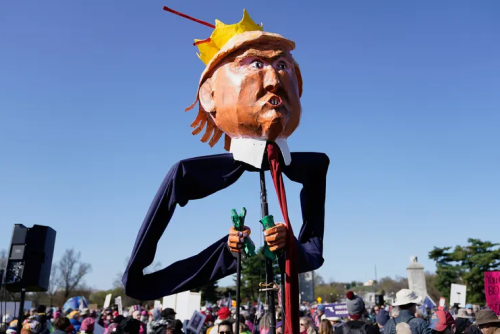
More than 8 million people showed up across 3,300 No Kings protests on Saturday. Organizers say it’s the largest single‑day protest in US history. Nothing on this scale has appeared in American public life for years. Maybe it’s time for a course correction.
Independent tallies put Saturday’s turnout between 5.2 and 9 million people, depending on which verified counts are used, meaning roughly two percent of the country took part. What stood out was not just the size of the event but its unusually broad spread: reports showed strong participation in suburbs, small towns, and rural counties that rarely register in national protest coverage. This suggests a broader cross‑section of Americans took part than in most recent demonstrations, perhaps because the issues involved feel so universal.
The reasons for this huge turnout are twofold. The first factor is the discontent that many Americans are feeling toward the war in Iran, immigration agents operating in their communities, and the increasingly authoritarian direction of Trump’s second administration. The second is the masterful organization that is essential for an event of this magnitude. This combination of factors created a moment of unmistakable public clarity, visible in towns and cities of every size. And the people who showed up reflected every corner of American life.
The reasons for this huge turnout are twofold. The first factor is the discontent that many Americans are feeling toward the war in Iran, immigration agents operating in their communities, the increasingly authoritarian direction of Trump’s second administration, and a worsening economic outlook that is touching households across the country. The second is the masterful organization that is essential for an event of this magnitude. This combination of factors created a moment of unmistakable public clarity, visible in towns and cities of every size.
The reasons for this huge turnout are twofold. The first factor is the discontent that many Americans are feeling toward the war in Iran, immigration agents operating in their communities, and the increasingly authoritarian direction of Trump’s second administration. The second is the masterful organization that is essential for an event of this magnitude. This combination of factors created a moment of unmistakable public clarity, visible in towns and cities of every size. And the people who showed up reflected every corner of American life.

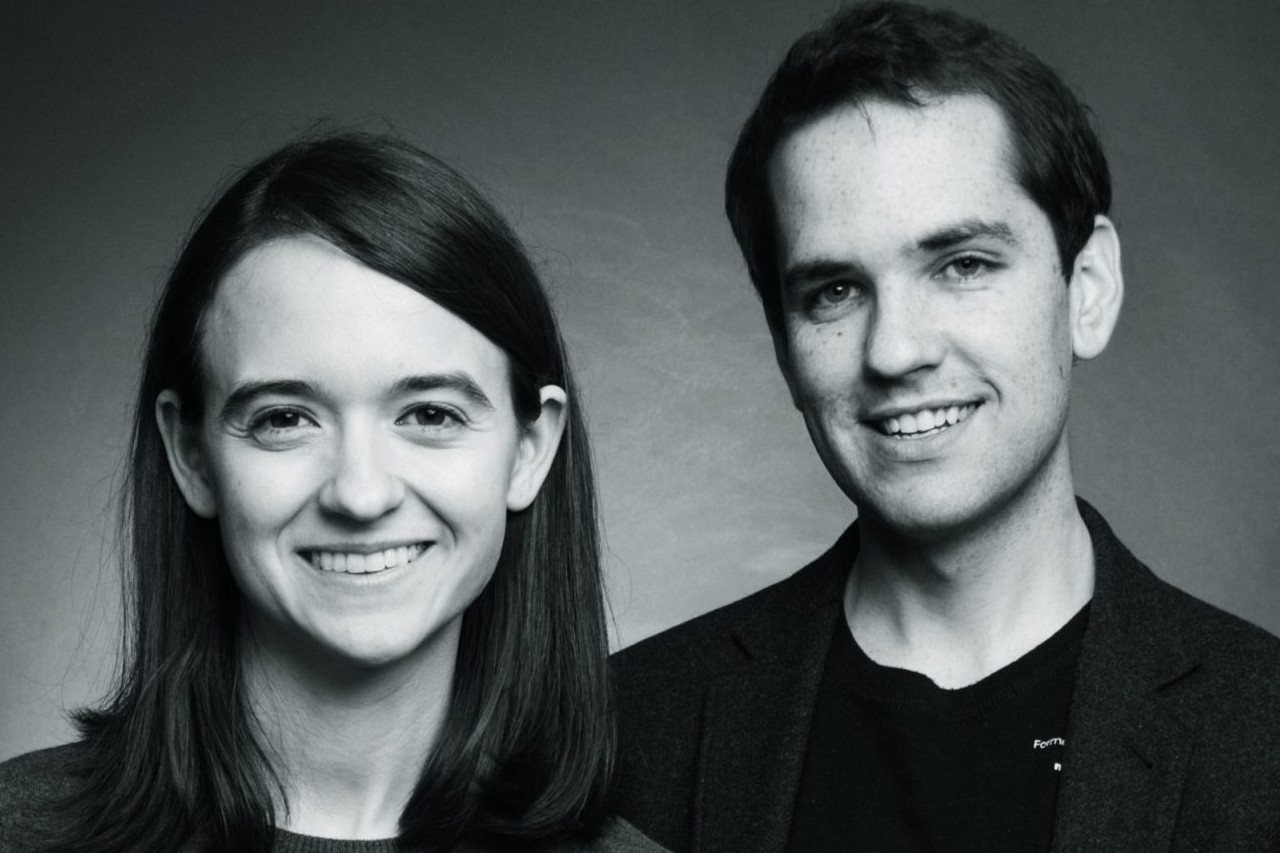
Leah Greenberg and Ezra
Ordinally this space is given to an analysis of specific Dayology Signatures, but since we do not have the birthdates of these individuals, we cannot provide that data. Instead, we’ll be examining the available information of this POWER COUPLE and determining their strongest PLANETARY ENERGIES with help from our AI buddy, COPILOT. It should be an interesting experiment.
The term POWER COUPLE has been used for some time to describe two people whose shared mission and combined strengths create a force larger than either one alone. This definition fits the pair we are examining perfectly – not because of any romantic association, but because their work partnership amplifies their influence in ways that neither could achieve independently.
To be clear, Leah Greenberg and Ezra Levin ARE married and live in Washington, D.C. but it is their collaborative work that reveals the true nature of their partnership. Their 2016 effort to compose a 23‑page action plan titled Indivisible: A practical guide for resisting the Trump agenda illustrates their shared genius. “It was a tool kit, plain and simple,” says Levin. “We chose the name Indivisible because we thought that progressives should come together beyond their singular issues. … If you’re for reproductive rights advocacy, great. But now you have to stand up for the Dreamers. If you’re an advocate for the Dreamers, okay, now stand up for a progressive tax code. And so on. That’s the only way to succeed in Washington.” The term Indivisible, is familiar to every American schoolchild who has ever recited the Pledge of Allegiance.
The Indivisible plan was deeply involved in the organization of the No Kings protests. It supplied the national framework, but the scale of the event came from a wider ecosystem — local organizers, allied groups, social‑media amplification, and a political moment that made millions of Americans ready to act. This structure is now firmly in place for future mobilizations, and credit must be given to Levin and Greenberg for the initial vision that made it possible. To take this matter to the next level, the following personality profiles were generated by COPILOT. Currently we have only the birth years of these two remarkable individuals: Ezra Levin was born in 1986 and Leah Greenberg in 1987. This feature will be continued as new details become available.
Ezra Levin has distinguished himself as a strategist with a rare blend of clarity, pragmatism, and structural thinking. His strength lies in translating broad political frustration into concrete, actionable steps that ordinary people can use, a skill that became evident in the creation of the original Indivisible guide. He is an articulate communicator who can distill complex systems into plain language, and he has a talent for building frameworks that help disparate groups work toward a shared goal. Levin’s leadership style is energetic, direct, and deeply focused on empowering others to take effective civic action.
Leah Greenberg brings a complementary set of strengths rooted in ethical clarity, relational intelligence, and disciplined organizational thinking. She excels at creating trust, fostering collaboration, and shaping environments where people feel both included and motivated. Her work reflects a steady commitment to principled, values‑driven action, and she is known for her ability to hold long‑term goals while navigating fast‑moving political conditions. Greenberg’s leadership is thoughtful, grounded, and quietly authoritative — the kind that strengthens movements from the inside out.

