

Dayology is new on the scene, but its foundations happen to be extremely old. The seven days of the week is one of those subjects that resides firmly in the physical dimensions of time while confounding the human consciousness. The following sources have contributed to the development of The Dayology Typology System. The puzzle is still being put together!

Dayology was introduced to the world in 2015 as a blog for Barbara Bianco to publish her seven day week musings. This novel website is now enjoyed around the world. She attributes the following traditions and individuals as critical influences.

Robin Murphy (1950 -2021 ) was a naturopathic physician who taught and practiced Homeopathy, Oriental Medicine, Tai Chi and Qigong for over 40 years. He directed the Hahnemann Academy of North America and authored several authoritative medical texts, where he integrated the seven essential cosmic energies.

Ellen Dugan (1963 – present) authored popular books concerning the magical energies of the seven days of the week. Her Book of Witchery is filled with fascinating information, spells and charms, keeping this ancient lore within easy reach of everyday readers. She has also won awards for her paranormal fiction.
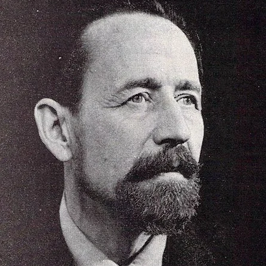
Dane Rudhyar (1895 – 1985) elevated modern astrology by shifting it away from static fortune-telling and transforming it into a legitimate tool for in-depth psychological analysis. His 1936 groundbreaking book The Astrology of Personality and his work on cosmic cycles revolutionized modern astrology.

Alice A. Bailey (1880-1949) authored a series of metaphysical books disclosing new information about the Seven Rays. These seven cosmic energies relate directly to the sacred planets of our solar system and provide a deeply esoteric structuring for unifying humanity with the kingdoms above and below.

Alistar Crowley (1875-1947) was an influential British occultist, author, and mountaineer. . Trained in ceremonial magic by the Hermetic Order of the Golden Dawn, he the week days to structure his rituals, creating a massive body of work that still inspires generations of magical practitioners.

H.L. Cornell M.D. (1872-1938) published The Encyclopedia of Medical Astrology in 1933 masterfully linking planets and signs to human health. While he did not focus exclusively on the seven days of the week, he utilized them to explain the hidden agents of illness and the timing of remedies.

Rudolf Steiner (1861-1925) (1861–1925) established Anthroposophy and pioneered the global Waldorf Educational System. Believing the spiritual energies of the seven days are deeply connect to human evolution, he uniquely linked each day of the week to specific expressions of art, music, and dance.

Alan Leo (1860-1917) authored a popular series of textbook guides and founded the modern world’s first astrology magazine. While he pioneered reading charts from accessible “bits and pieces” of personality data, he was also the first ]to openly introduce Esoteric Astrology to the public.

Helena Blavatsky (1831-1891) co-founded the Theosophical Society, heavily featuring the sacred number seven across her writings. She linked the seven classical planets directly to the seven days of the week, introducing the esoteric concept that each individual is born under a particular ruling “star.”

Charles Dickens (1812–1870) created memorable characters across fifteen major novels. A deeply disciplined author, he typically wrote one thousand words a day on a strict schedule. His only exception was Friday, which he felt very strongly was his “lucky day” for embarking on new life ventures.

Hans Christian Andersen (1805 – 1875) Hans Christian Andersen (1805–1875) is celebrated for his timeless fairy tales. Yet something in the cultural air prompted him to compose Ugedagene, a clever piece that personifies the days of the week, allowing them to bicker and express themselves as distinct personality types at a social gathering.
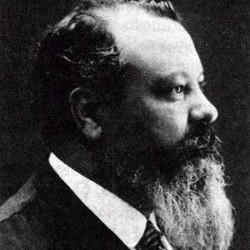
Papus / Gérard Encausse (1865–1916) was a French hypnotist, physician, and occultist who co-founded the Kabbalistic Order of the Rose-Croix. His writings on tarot, astrology, and daily energetic cycles synthesized Western esoteric traditions, linking the days of the week deeply to our internal spiritual archetypes.
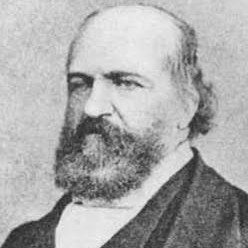
Éliphas Lévi (1810–1875) was an influential French esotericist whose writings heavily inspired the 19th-century occult revival. Lévi structured many of his magical rituals, correspondences, and planetary evocations around the specific energetic virtues of the planetary rulers of the seven days of the week.
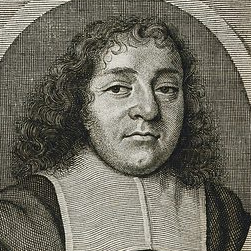
John Gadbury (1627–1704) was a prominent English astrologer and contemporary of William Lilly who published extensive almanacs. He contributed to the mainstream tracking of planetary hours and daily rulerships, bridging medieval astrology with the emerging print culture of the Enlightenment.
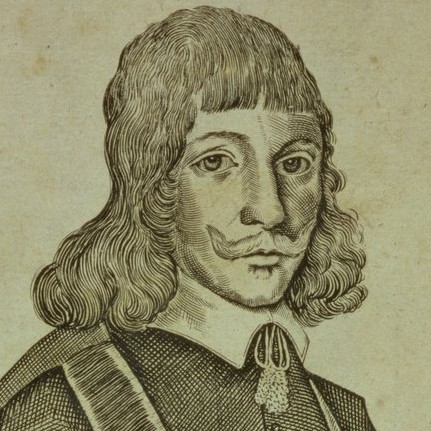
Nicholas Culpeper (1616–1654) was an English botanist, herbalist, and physician who famously popularized medical astrology. He meticulously mapped the seven traditional planets to specific medicinal herbs and bodily organs, creating an accessible, daily framework for planetary rulership over health.

William Shakespeare (1564-1616) portrayed the classic “Ages of Man” utilizing a traditional seven-stage model of human life. When he famously wrote “All the world’s a stage,” his artistic
intention was to depict the seven phases of human growth, from the helpless crying infant to the wise but declining elder.

The Key of Solomon is a famous Renaissance text dating back to the 14th or 15th century. It offers a series of contemplative rituals designed to align with the unique planetary energies of each day of the week, inviting these cosmic rhythms to guide personal insight, inner mastery, and spiritual well-being.

The Sun, Moon, and five planets are beautifully framed in the medieval astronomical work of Johannes de Sacrobosco (1195–1256). For over two centuries, his text De sphaera mundi served as the Western world’s most authoritative guide. It later became an early printing success, with dozens of editions.
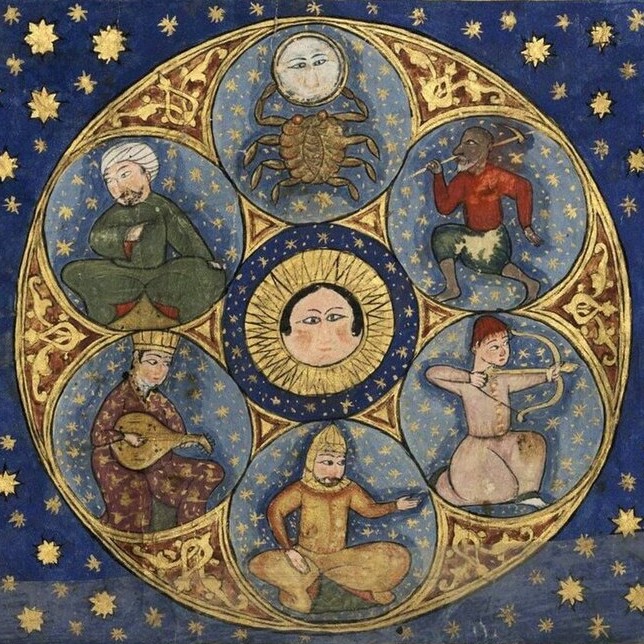
During the Islamic Golden Age, Arabic astrologers grouped
the Sun, Moon, and five visible planets into a unique system called Al-Sayyārah. These seven celestial “wanderers” were grouped as “anchors” bringing cosmic archetypes into everyday life and shaping our weekly human journey.

Constantine (272–337 CE) elevated Sunday to become the most important day of the week. After this Roman emperor converted to Christianity, he officially adopted the seven-day calendar and decreed that all public work cease on Sunday, exempting farmers due to the vital nature of their labor.

The Parapegma (5th Century BCE ) was a timekeeping device used by the ancient Greeks and Romans. Operating like a simple, physical calculator, it featured movable pegs to track the twelve astrological signs and the seven planetary deities that ruled the daily concerns of the week.

According to Judeo-Christian tradition, the prophet Moses wrote Genesis, the first book of the Bible. It accounts for the seven-day creation and the complex relationship between humanity and God. In this text, the Creator rests upon the final day of the week, sanctifying it as a day of observance.

In the Burmese Buddhist tradition, eight symbolic animals represent the days of the week, with Wednesday divided equally into morning and evening. Each astrological animal carries its own distinct qualities, allowing people to identify the core temperament of those born upon each day.
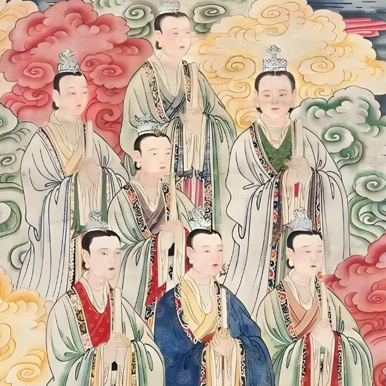
Daoism teaches that the seven stars of The Great Bear cast divine energy through the Earth’s seven Luminaries, (the physical Sun, Moon and five elemental planets). This steps down the stellar frequencies for the good of all living things on Earth, aligning human consciousness with the universe.
In the Vedic cosmology, Aruna is the mythical Charioteer of the Sun, steering a chariot drawn by a team of seven horses. Rather than being mere symbols for the colors, notes or chakras, these planetary steeds represent the Chhandas – the seven rhythmic patterns within all sacred Sanskrit poetry.
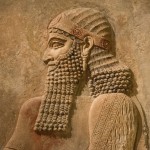
King Sargon of Akkad (2334 – c. 2279 BCE) built the ancient Mesopotamian empire, anchoring its sacred rhythms to the number seven. This cosmic structure was equally honored through the procession of seven wandering planets, seven primary deities, and the seven tiers of the ziggurat.

The concept of a seven-day week is believed to have originated from observations of the Moon passing through four distinct phases of seven days each month. The ancient Babylonians, who are credited with this first lunar calendar, used it to manage every sort of activity throughout the ancient world.
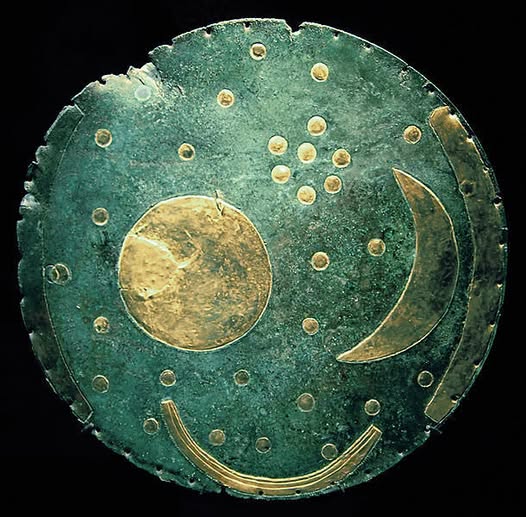
The Nebra Sky Disk, dating back 3,600 years to the Bronze Age, is the world’s oldest concrete depiction of the cosmos. Among its recognizable elements are the Sun, Moon, and a small circle of seven stars. Unearthed in Germany in 1999, it is recognized as a ceremonial object with astronomical alignments.

How does all of this “sevenfold symbolism” add up and what does it actually mean? Is there something very “unique” regarding the number seven? As we have discovered many world cultures and intelligent individuals have given this numeral a singular place in their religions and cosmologies.

